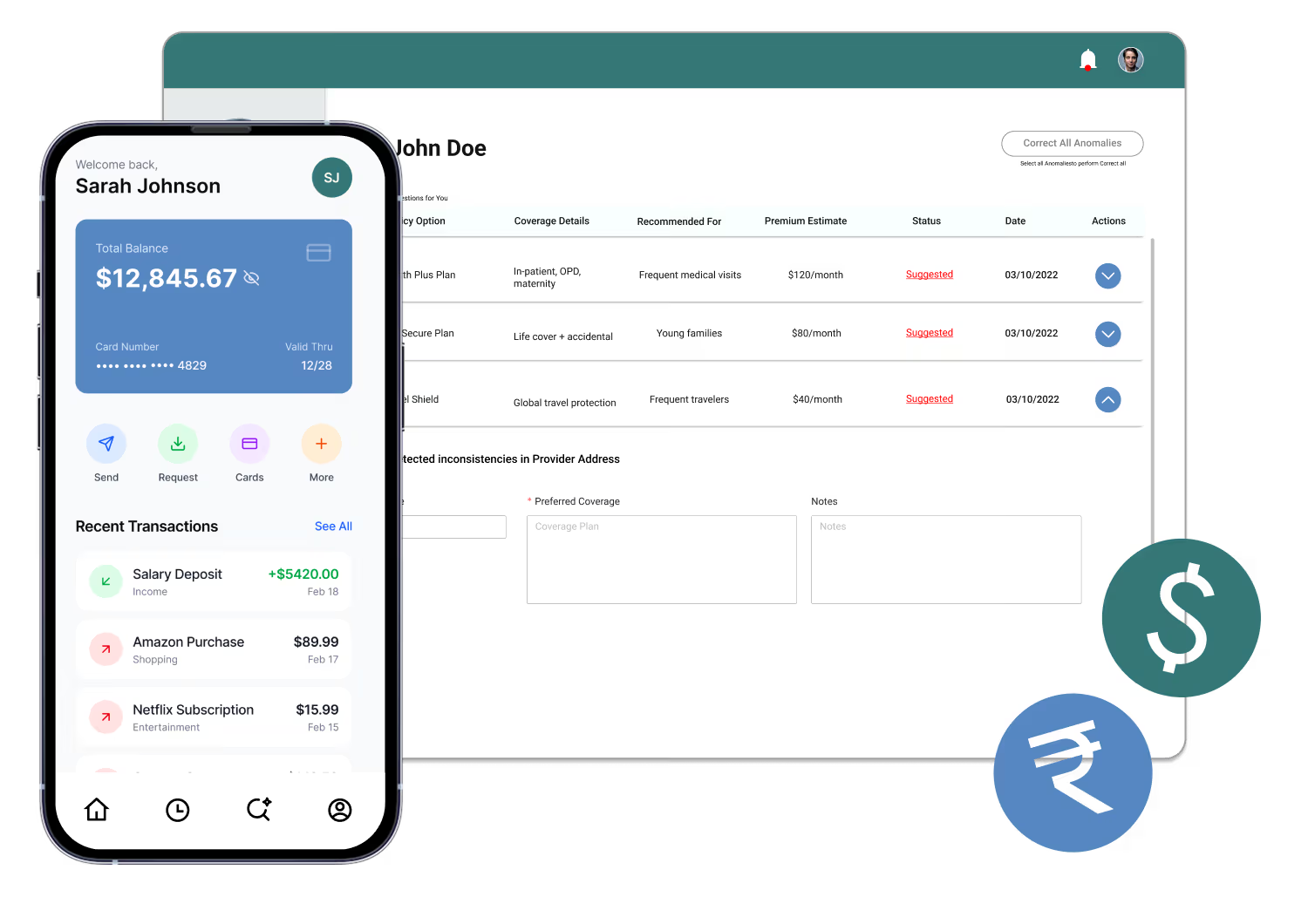
We connect every step of the policyholder journey – quoting, onboarding, claims, renewals – into one simple experience. Agents keep it running smoothly. Specialists make sure the experience still feels human when it matters, like during a claim.
We move outdated policy administration and claims systems to modern, cloud-based infrastructure. Agents handle the migration work at scale. Specialists check that nothing breaks, especially around compliance and existing policyholder data.
We build platforms that support real-time risk scoring, instant quoting, and connected claims data across every line of business. Agents keep the data flowing between systems. Specialists make sure the underlying risk models stay sound as conditions change.
We use AI to take manual work off your team’s plate – claims triage, fraud screening, policy renewals. Agents do the repetitive parts. Specialists step in wherever a decision affects a payout, a price, or a regulator’s expectations.
We build AI tools that improve underwriting and claims, without putting full control in the hands of a machine. Agents score risk and flag suspicious claims early. Certified specialists review every flagged case and make the final call.
Straight answers about how AI-powered claims and underwriting platforms actually work, and why we don't let AI make coverage decisions unsupervised.
It's a system that reviews claims automatically — checking documents, assessing damage, flagging anything unusual — instead of relying entirely on manual review. We build these with AI agents handling the first pass on every claim, and certified insurance specialists reviewing anything flagged as high-value, contested, or unusual before a payout decision is finalized.
AI can spot patterns that suggest fraud — inconsistent claim details, unusual timing, mismatched documentation — far faster than a manual review ever could. But a flagged claim isn't the same as a confirmed one. Our specialists investigate every case the system flags, because accusing a real customer of fraud is a decision that deserves a real person's judgment, not just a statistical score.
AI pulls in more data than a human underwriter could review alone — claims history, market trends, behavioral signals — and uses it to score risk more precisely. That means more accurate pricing and fewer bad-risk policies slipping through. Our certified specialists review the models behind these scores regularly, so pricing stays fair and compliant as regulations and markets shift.
Not on its own. AI is excellent at processing data fast, but coverage decisions affect real people's financial security, so we never let an agent make a final call alone. Our agents handle the data work and produce a recommendation. Our certified specialists review it before any decision that affects a policyholder's coverage or payout is finalized.
Insurance data is often messy — PDFs, handwritten claims forms, scanned medical records, inconsistent formats. AI agents extract and structure that data automatically, at a scale manual teams can't match. Our specialists then validate that the structured data is accurate before it feeds into pricing or claims models.
Automated underwriting means software makes the decision with no human involved. AI-assisted underwriting means software handles the data and analysis, but a certified underwriter reviews and approves the outcome. We build the second kind, because fully automated underwriting tends to miss context that only an experienced underwriter would catch.
For straightforward claims, agents can complete document review and initial assessment in minutes instead of days. For complex or high-value claims, the agent still does the groundwork, but a certified specialist reviews it before approval, so speed never comes at the cost of getting it right.
Most InsurTech platforms either move too slowly because everything is manual, or move fast but make decisions nobody can fully explain. We build the middle path: AI agents handle the volume, and certified insurance specialists — people who understand underwriting, claims, and regulation — review what the agents produce before it reaches a policyholder or a regulator. That's the difference between a system that's fast and a system you can actually stand behind.