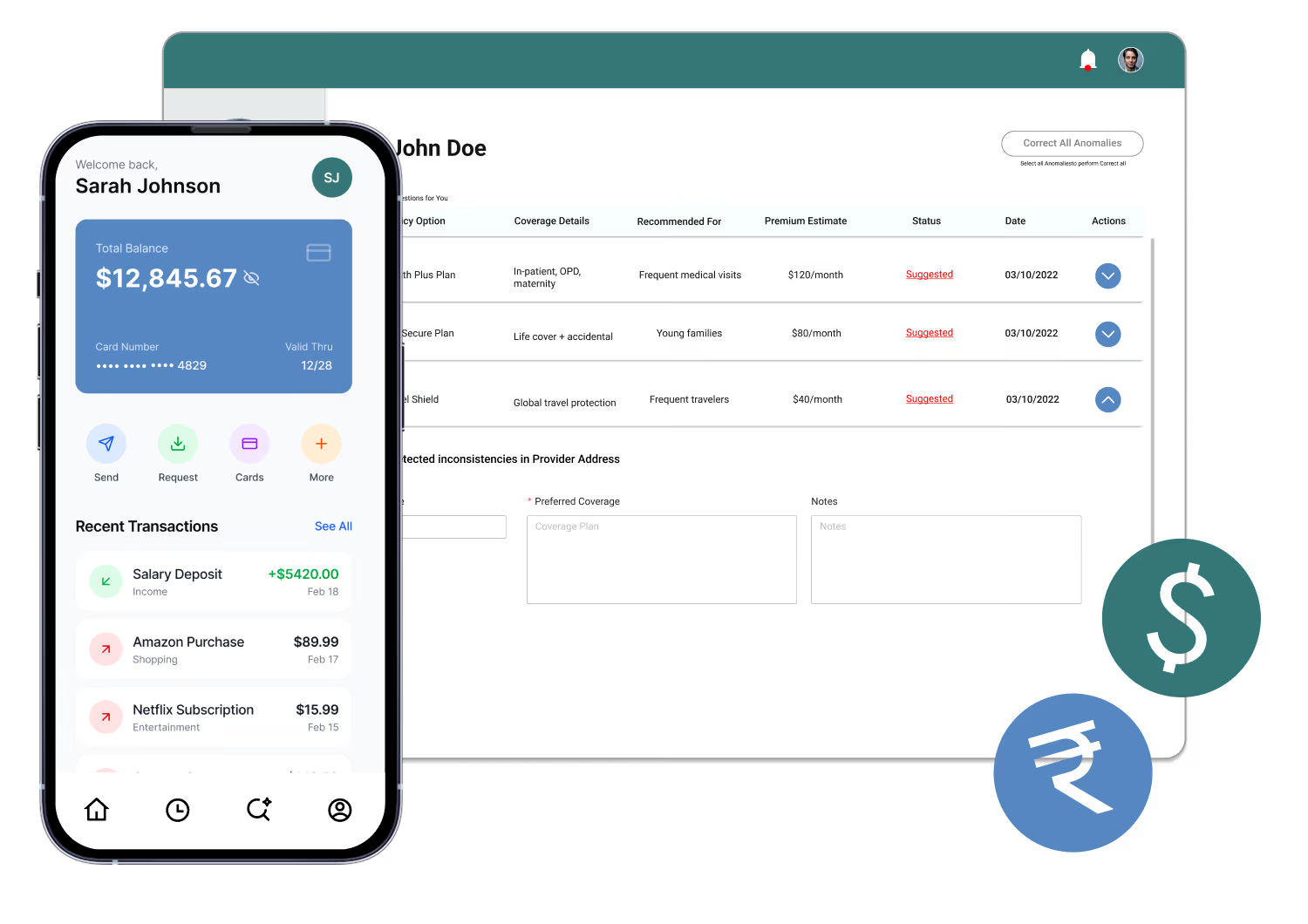
We connect every step of the patient journey — scheduling, intake, visits, follow-up, billing — into one simple experience. Agents keep it running smoothly. Specialists make sure the experience stays human wherever a patient needs it to.
We move outdated electronic health record and practice management systems to modern, cloud-based infrastructure. Agents handle the migration work at scale. Specialists check that nothing breaks, especially around patient data and compliance.
We build platforms that support real-time care coordination, remote monitoring, and connected patient data across providers. Agents keep the data flowing between systems. Specialists make sure the underlying clinical logic stays sound as the platform scales.
We use AI to take repetitive work off your team’s plate — documentation, claims processing, appointment scheduling. Agents do the repetitive parts. Specialists step in wherever a decision affects a patient’s care or a clinical outcome.
We build AI tools that improve documentation and early detection, without putting clinical decisions in the hands of a machine. Agents flag risk signals and reduce administrative load early. Certified specialists review every flagged case and make the final call.
Straight answers about how AI-powered clinical and administrative platforms actually work, and why we never let AI make a clinical decision unsupervised.
It's a system that listens to or processes a patient visit and drafts the clinical note automatically, instead of a provider typing it manually after the fact. We build these with AI agents handling the draft, and certified clinical specialists or the provider themselves reviewing and approving every note before it becomes part of the patient's record.
No, and it shouldn't. AI can flag patterns that suggest a condition needs attention — unusual lab results, symptom combinations, risk scores — much faster than manual review. But a diagnosis is a clinical decision with real consequences, so our agents only surface signals. A certified clinical specialist always makes the actual call.
Automating the data-checking part of claims is safe and saves significant time. Automating the approval or denial decision is where it gets risky, because that decision affects whether a patient's care gets paid for. Our agents review claims and flag inconsistencies. Our certified specialists make the final decision on anything contested or high-value.
AI agents can ask intake questions, capture symptoms, and flag urgency level before a patient even speaks to a provider, which speeds up access significantly. But triage that determines care priority is a clinical judgment. Certified clinical specialists review what the agent captures and make the actual triage decision.
Fully automated care means software makes a clinical call with no provider checking it; that's not something we build, because patient safety depends on clinical accountability. AI-assisted care means software handles the documentation and pattern detection, and a certified clinical specialist reviews and approves anything that affects a patient's treatment. We build the second kind, always.
A large share of a provider's day goes to documentation, scheduling, and paperwork instead of patients. AI agents handle that administrative load automatically, drafting notes, managing schedules, and processing routine paperwork. That gives providers more time with patients, while certified specialists still review anything that becomes part of a permanent medical or billing record.
For routine administrative tasks, agents can complete documentation and claims checks in minutes instead of hours. For anything clinical or high-stakes, the agent still does the groundwork, but a certified specialist reviews it before it affects care or payment, so speed never comes at the cost of patient safety.
Most health-tech platforms either move too slowly because everything is manual, or move fast in ways that worry clinicians and compliance teams. We build the middle path: AI agents handle the administrative and data volume, and certified clinical and health-tech specialists — people who understand patient care and regulation — review every decision that actually touches a patient. That's the difference between a platform that's efficient and a platform clinicians trust.